
Asymmetry by Design: Reading Indonesia–Austria Carbon Cooperation in International Political Economy
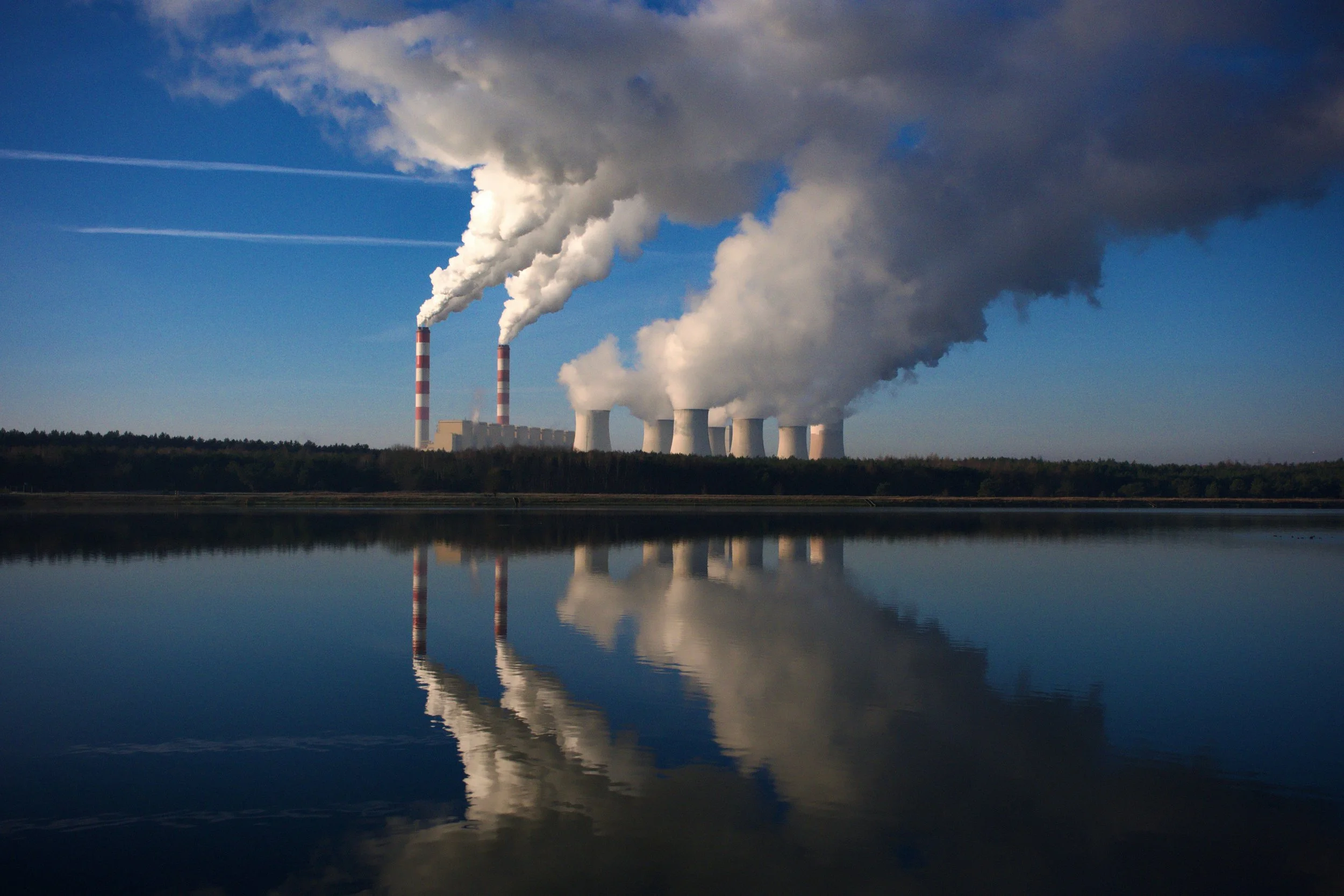
Carbon trading refers to the exchange of carbon credits, allowing entities that exceed prescribed emissions limits to purchase allowances. Each carbon credit grants a company permission to emit a specified quantity of carbon dioxide or other greenhouse gases during production activities. One credit typically corresponds to the reduction of one metric ton of CO₂ emissions.
Arguably, the nature of carbon trading leads a carbon cooperation to be often read as a simple climate collaboration. However, when examined in the realm of international political economy (IPE), the move toward completing the Indonesia-Austria Mutual Cooperation Agreement (MRA) in carbon trade, which was announced in November 2025, actually demonstrates a structural asymmetry—asymmetry by design.
Indonesia is a country of ecological abundance. With over 130 million hectares of forest, it is one of the world's largest carbon sinks. However, this abundance comes with challenges: deforestation, evolving governance, and a relatively new carbon market. The Indonesia Carbon Exchange was newly operational, having been launched only in 2023. As of 2024, its liquidity remained low and the cap-and-trade mechanism was not yet fully operational.
Austria is at the other end of the spectrum. It possesses significant regulatory capacity, capital, and technology, but lacks the physical space and political legitimacy to store carbon domestically. The Austrian ban on geological CO₂ storage and internal political fragmentation make managing residual emissions a problem that cannot be fully addressed domestically.
This asymmetry is not an anomaly—it is structural. Indonesia is ecologically rich, Austria is institutionally rich. One has carbon sinks, the other has carbon pressures. From an IPE perspective, this creates a relationship of mutual need, but it is not symmetrical.
However, unlike classic North-South relations, this asymmetry does not automatically create hierarchy. Indonesia does not treat carbon as a free commodity subject solely to global prices. By classifying carbon units as securities and requiring registration in the National Registry System (SRN-PPI), the country maintains control over what can be traded in the Indonesian carbon market and with whom.
Austria, on the other hand, does not come as a donor. It comes as a country also bound by regulations, domestic pressures, and international targets. Carbon cooperation, therefore, becomes a space for equal negotiation—albeit structurally asymmetrical.
This is precisely where the asymmetric design comes into play. Indonesia is incentivized to strengthen its carbon market governance and infrastructure. Austria is afforded a pathway to meeting its climate targets without having to breach domestic political boundaries. Both operate within a strict legal and institutional framework, rather than through personal relationships or ad hoc politics.
However, this design is also fragile. The risk of double counting, differing definitions of carbon units, and inconsistencies in measurement systems across countries can quickly erode trust. Without strong institutional coordination, asymmetry can turn into a source of conflict, rather than cooperation.
Interestingly, this Jakarta-Vienna cooperation also reflects changing global geopolitical patterns. Countries are no longer simply exchanging goods or security, but also mitigation capacity. Carbon has become a strategic asset—not in a military sense, but in terms of a country's ability to maintain the legitimacy of its climate policies.
In this framework, Indonesia–Austria carbon trade MRA is not a story of who helps whom, but rather about how countries with different structural positions design politically acceptable relations within their respective countries. Asymmetries are not being eliminated, but managed.
And perhaps therein lies the most important lesson: in a world increasingly climate-conscious yet increasingly sensitive to sovereignty, the cooperation that endures is not one that is symmetrical, but one that is consciously designed to accommodate differences.