
Myanmar Crisis: The Bumpiest Part of the Road towards ASEAN Economic Community
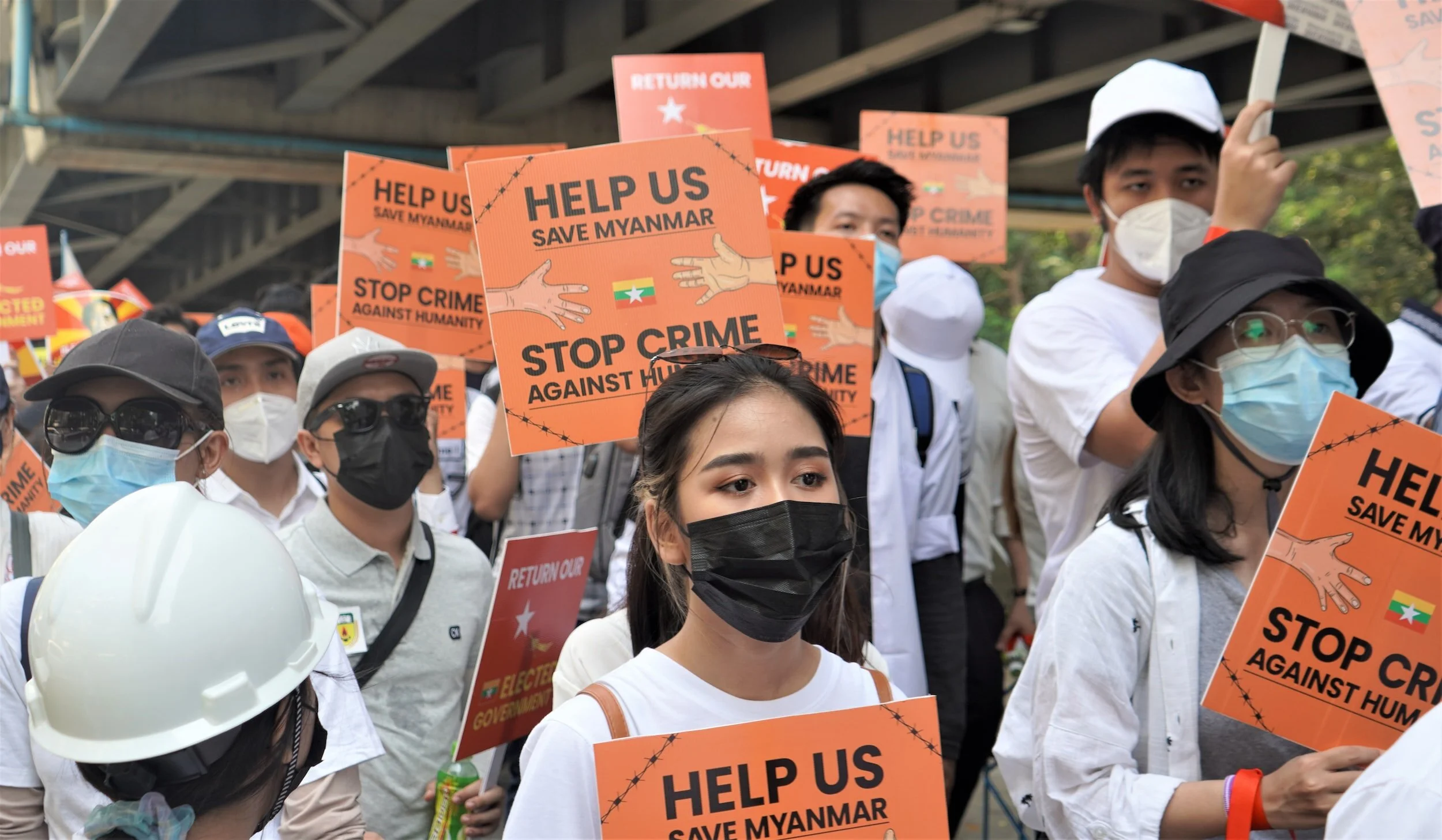
Regional consensus amongst the members must be pursued since it not only resembles regional solidarity but also crucial in terms of acknowledging the threat for market liberalization embedded in AEC in order, especially in getting Myanmar back on the road of national economic progress. Pictures: Unsplash
The 2023 ASEAN Summit marks 56th years of Southeast Asia’s oldest regional mechanism as well as the 46th summit after it was conducted for the first time in Bali back in 1976. Under the umbrella of “The Epicentrum of Growth”, ASEAN intends to continue their dynamic economic performance, even further increasing the region’s influence on the global economic landscape which emphasizes a people-to-people approach. Amidst the global economic stagnancy ASEAN has still been able to thrive. The combined GDP of ten ASEAN Member States was valued at US$3.2 trillion in 2019 making them collectively ranked as the fifth largest economy in the world However, this extraordinary economic performance was challenged during Covid-19. The 2 years of pandemic especially affected foreign direct investment (FDI) which was declining by 40% in 2020 (ASEAN Key Figure, 2020). Apart from economic hurdles, the objective of centralizing people as the generator of regional growth has also been hampered by political unrest in Myanmar which undeniably devastated the country’s economy. Still, ASEAN has not come with any binding settlement apart from formal statements like 5 points consensuses. Moreover, this article will explore more about the Myanmar Crises as a stumbling block for ASEAN’s Economic Society.
Non-interference has become the main tenet within ASEAN regional framework, the very idea which is regarded by some to be limiting the progress of regional consensus towards the Myanmar Crises settlement. Nevertheless, the non-interference principle granted legitimation to provide non-state actors the people a bigger role beneath the umbrella of “people-to-people approach” as laid out on ASEAN Economic Cooperation 2025 blueprint “Widen ASEAN people-to-people, institutional, and infrastructure connectivity through ASEAN” (AEC Blueprint 2025). However, the path towards an ideal version of the ASEAN Community has been bumpy ever since it was initiated back in 1967. The road even got bumpier as the region admitted countries like Laos, Cambodia, and Burma’s (now Myanmar) membership which had been facing political instability at home. This led to so much criticism, especially from the West on the ground of authoritarianism and communism. Despite the internal and external struggles, by July 1997 Burma had officially become the member of ASEAN (Cribb, 1998).
At first, ASEAN’s disregard towards the west’ point of view might be formally justified since ASEAN always leaned on the principle of non-interference, the principle which successfully guided diversity–including political system–upon the region toward a common understanding and perception. Yet, the same mechanism has been giving ASEAN legitimation to abandon Myanmar in the first place, especially at the time during crises. Although the reformed policy in 2010 has resulted in positive impacts across economic sectors–including robust growth by 7.3 % in 2012, increase in trade and foreign capital, expansion of the financial sector, and rapid prosperity of the private sector (Bernharndt & Hein, 2019), the latest coup in 2021 has eroded the ongoing market liberalization. The coup has brought down national economic resources since it took place right after massive vaccination when businesses were anticipated to bounce back (Caillaud, 2022).
For Myanmar, AEC has indeed put the steppingstone in Myanmar’s trade and investment liberalization progress (Umezaki, 2012). Above many sectors, foreign direct investment in Myanmar has become–if not the most–one of the primary areas that has been sustained by the AEC (Hseng Noan, 2015). Yet, Myanmar’s essential economic resources have been stunted by the coup causing the drought in FDI’s flow which partly contributed to Myanmar's growth regression by -5.9% in 2021 (ADB, 2023). The absence of political consensus on the Myanmar crisis certainly has injured the end goal of economic integration in pushing economic welfare. Apart from the economic sectors, the turmoil has in fact divided the country not only into a political crisis but also into an ethnic-based division, even humanitarian crises (like Rohingya refugees’ crisis). Still, ASEAN has made no progress to ease the burden of the Burmese apart from distributing humanitarian assistance. Therefore, at least until the dawn of the ASEAN Summit in 2023, the implementation of AEC can be criticized into two points. Firstly, the existing framework is only beneficial for the countries that have successfully implemented democracy at least in a partial way (economic liberalization). Secondly, AEC can’t go further than macro-economic sectors, especially in Myanmar.
In conclusion, it’s still a long and winding road ASEAN has to go towards their ideal version of economic community. After euphoria of the recent summit, ASEAN now should perhaps rethink what is the smallest thing that they can do to end the crises after two years with no progress. The noble principle of non-interference which was arguably built on the ground of respecting political diversity has grown more into an abandonment of Myanmar, especially in acknowledging how bad the political turmoil affects Myanmar’s economic progress. Therefore, regional consensus amongst the members must be pursued since it not only resembles regional solidarity but also crucial in terms of acknowledging the threat for market liberalization embedded in AEC in order, especially in getting Myanmar back on the road of national economic progress.
References
Asian Development Bank (ADB). (2023). Myanmar: Economy. Retrieved on 19 May From https://www.adb.org/countries/myanmar/economy.
ASEAN. (2015). ASEAN Economic Community Blueprint 2025. Retrieved on 22 May from https://asean.org/asean-economic-community-blueprint-2025/.
ASEAN. (2020). ASEAN Key Figures 2020. Retrieved on 22 May from https://asean.org/book/asean-key-figures-2020-3/.
Bernhardt, T., & Hein, A. (2019). Myanmar: On a Bumpy Road of Transition. Southeast Asia and the ASEAN Economic Community, 351-377.
Cribb, R. (1998). Burma's entry into ASEAN: background and implications. Asian Perspective, 49-62.
Hseng Noan, N. (2015). The Impact of ASEAN Transition to ASEAN Economic Community on Myanmar Economy. RSU International Journal of College of Government (RSUIJCG), 2(1).
Umezaki, S. (2012). Building the ASEAN Economic Community: Challenges and Opportunities for Myanmar. Economic Reforms in Myanmar: Pathways and Prospects, BRC Research Report, (10).